
What is Sciatica?
Sciatica is not a distinct medical disease in itself, but rather a clinical symptom complex resulting from irritation, inflammation, or mechanical pinching of the sciatic nerve—the longest and thickest nerve in the human body.
Originating from the lower lumbar and sacral segments (L4 through S3 nerve roots), the sciatic nerve traverses through the deep gluteal tissues and extends all the way down the back of the thigh, calf, and into the soles and toes of the foot.
When compressive stress or inflammatory mediators compromise this neural highway, patients experience pain that can range from an irritating, dull throb to an incapacitating, electric shock-like sensation traveling down one side of the body.
Common Symptoms & Warning Signs
Recognizing the onset of sciatica early is crucial to preventing long-term nerve irritation and compensatory postural deformities.
- Sharp, shooting, or burning pain originating in the lower back or one buttock and traveling down the hamstring and calf.
- Numbness, tingling sensations, or a 'pins-and-needles' feeling in the leg or foot.
- Muscle weakness in the affected leg, making it difficult to lift the toes or push off the ground during walking.
- Pain that worsens considerably after sitting in one position for more than 20 minutes.
- Sudden sharp twinges triggered by sneezing, coughing, or forward bending.
Root Causes of Sciatic Nerve Compression
The most frequent anatomical cause of sciatica is an intervertebral disc herniation or bulge at the L4-L5 or L5-S1 junction. When the outer fibrous wall of the disc weakens, the gel-like core protrudes into the spinal canal or intervertebral foramen, mechanically pressing against or chemically irritating the adjacent nerve root.
Other contributing conditions include piriformis syndrome—where a chronically tight or spasming piriformis muscle in the buttock entraps the passing sciatic nerve—lumbar spinal canal stenosis, degenerative disc disease, and lumbar facet joint arthropathy.
Sedentary desk lifestyles with poor lumbar support, prolonged vehicular commuting on uneven roads, and sudden unconditioned heavy lifting are pervasive everyday drivers across urban populations in Hyderabad.
The Ayurvedic Perspective: Gridhrasi
In classical Ayurvedic texts such as the Charaka Samhita and Sushruta Samhita, sciatica is described under the nomenclature of 'Gridhrasi'. The term derives from 'Gridhra' (vulture), metaphorical of the altered, limping gait that patients develop due to unremitting pain.
Gridhrasi is classified as one of the 80 primary Nanatmaja Vata Vyadhis (diseases caused primarily by vitiated Vata dosha). When aggravated Vata lodges in the Kandara (tendinous pathways) and Sira (neural and vascular channels) of the hip and leg, it impairs circulation and produces severe pain (Ruk), stiffness (Stambha), and functional limitation.
Classical Ayurveda recognizes two distinct presentations: Vataja Gridhrasi (dominated by sharp, radiating pain, dryness, and muscle twitches) and Vata-Kaphaja Gridhrasi (characterized by a heavy, sluggish leg sensation, dull numbness, coldness, and drowsiness). Differentiating these two subtypes determines the exact therapeutic protocol applied at Swasthik Ayurveda.
Core Ayurvedic Therapies at Swasthik Ayurveda
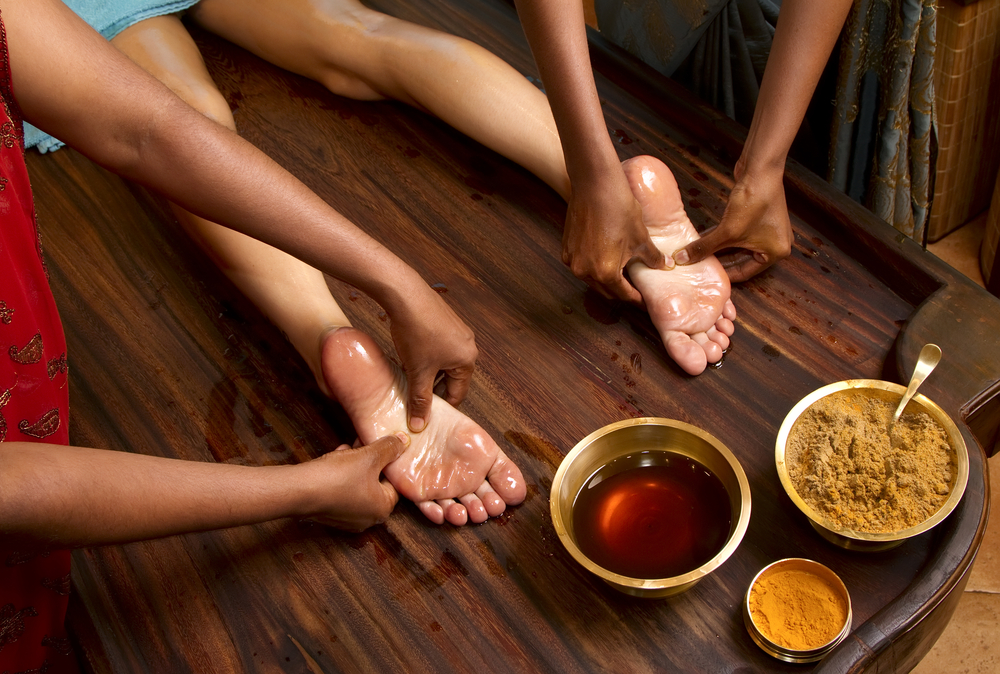
Rather than relying on continuous non-steroidal anti-inflammatory drugs (NSAIDs) or immediately resorting to spinal surgery, Swasthik Ayurveda in Kukatpally, Hyderabad offers a structured, non-invasive Ayurvedic treatment protocol:
- Kati Vasti: A specialized gram dough ring is created over the lumbosacral region, within which warm, medicated herbal oils (such as Mahanarayana, Sahacharadi, and Dhanwantharam) are poured and maintained at a therapeutic temperature for 35 to 45 minutes. This enhances local microcirculation, relieves paraspinal spasm, and reduces nerve root edema.
- Agnikarma (Thermal Micro-Stimulation): A highly specialized classical thermal procedure where micro-points of therapeutic heat are delivered to precise Ashu-Vedana (pain-transmitting) loci along the sciatic course, stimulating endorphin release and desensitizing hyperactive nerve pathways.
- Patra Pinda Sweda: Fomentation using warmed boluses packed with anti-inflammatory medicinal leaves (such as Nirgundi, Eranda, and Arka) fried in medicated oils, effectively dissolving deep gluteal knots and piriformis spasms.
- Vasti Chikitsa: Therapeutic administration of specialized medicated enemas (Matra Vasti and Kashaya Vasti). Vasti is venerated in Ayurveda as 'Ardha Chikitsa' (half of all medicine) for Vata disorders, pacifying the root systemic source of Vata in the colon and pelvis.
- Customized Internal Rasayanas: Herbal decoctions containing Shallaki, Guggulu, Rasna, and Ashwagandha to modulate systemic inflammation and nourish nerve sheaths.
Daily Habits & Ergonomic Protection
In conjunction with clinical therapies, patient empowerment through correct lifestyle habits is essential for permanent freedom from sciatica:
- Use a lumbar support roll or ergonomic cushion when sitting at your office chair to preserve natural spinal lordosis.
- Avoid sitting continuously for longer than 45 minutes; stand up, stretch the hip flexors, and walk for 2 minutes.
- Sleep on a medium-firm supportive mattress; if sleeping on your side, place a pillow between your knees to keep your pelvis aligned.
- Avoid cold water baths and air-conditioners blowing cold air directly onto your lower back, as cold rapidly aggravates Vata dosha.
- Never perform jerky forward-bending exercises during an acute sciatica flare-up.