
Understanding the L4-L5 Spinal Segment
The lumbar spine consists of five sturdy vertebrae labeled L1 through L5. Among these, the junction between the 4th lumbar vertebra (L4) and the 5th lumbar vertebra (L5) represents the fulcrum of spinal mechanics in the human body.
This dynamic motion segment supports the bulk of upper body weight while facilitating significant ranges of forward flexion, backward extension, and rotational twisting.
Because of this heavy mechanical workload, the intervertebral disc between L4 and L5 is subjected to tremendous compressive and shearing forces, making it the most vulnerable location for degenerative disc disease, annular tears, bulges, and herniations.
Symptoms of L4-L5 Disc Bulge
An L4-L5 disc bulge can manifest with localized back pain alone or with radiating symptoms if the bulging disc encroaches upon the exiting L5 nerve root or descending thecal sac.
- Persistent aching or burning sensation localized across the beltline in the lower back.
- Pain radiating across the posterior-lateral aspect of the hip, thigh, down the outer calf, and reaching the top of the foot and great toe.
- Extensor weakness making it difficult to lift the big toe or walk on heels (L5 motor deficit).
- Numbness, tingling, or diminished sensation over the top surface of the foot (dorsum).
- Aggravation of lower back distress upon prolonged sitting, driving, coughing, or bending forward.
- Sudden 'locking' of the lower back when attempting to stand upright from a bent-over position.
Disc Bulge vs. Herniation vs. Extrusion
Patients often feel overwhelmed when reading their lumbar MRI reports. Understanding the precise terminology helps alleviate unnecessary fear:
Disc Bulge: The outer fibrous ring (annulus fibrosus) stretches and extends symmetrically beyond the normal vertebral margin across more than 25% of the disc circumference, usually without a full tear in the outer wall.
Disc Protrusion / Herniation: A focal tear allows the inner gel-like nucleus pulposus to push outward through a localized segment of the annulus, directly irritating adjacent nerve roots.
Disc Extrusion: The nuclear material breaks through all annular layers, though it remains continuous with the disc center.
Importantly, numerous clinical studies confirm that the degree of disc bulge on an MRI does not strictly correlate with pain intensity. Conservative Ayurvedic management successfully resolves symptoms in the overwhelming majority of cases without surgery.
Clinical Evaluation & MRI Correlation
At Swasthik Ayurveda, treatment begins with a meticulous clinical and radiological correlation conducted by Dr. Krishna Mohan. We examine:
Physical range of motion in lumbar flexion, extension, and lateral bending.
Straight Leg Raise (SLR) test and Lasegue's sign to detect dynamic sciatic nerve irritation.
Neurological assessment including deep tendon reflexes, dermatomal light touch sensation, and myotome muscle power tests.
Detailed review of recent MRI films to pinpoint whether the bulge is central, paracentral, or foraminal, and whether there is associated ligamentum flavum hypertrophy or canal stenosis.
The Ayurvedic Treatment Approach
In classical Ayurveda, an L4-L5 disc bulge is approached as Kati Gata Vata accompanied by Asthi-Majja Dhatu Kshaya (degenerative depletion of bone and connective tissues). Our targeted non-surgical protocol includes:
- Kati Vasti: Retention of warm medicated herbal lipid compounds within an airtight herbal ring placed directly over the L4-L5 segment. This deeply hydrates paraspinal ligaments, enhances microvascular perfusion, and relieves nerve root compression.
- Agnikarma Therapy: Classical micro-thermal stimulation applied at precise pain epicenters along the L5 dermatome to desensitize nerve transmission and eliminate chronic muscle guarding.
- Medicated Matra Vasti: Administration of herbalized lipid enemas (such as Sahacharadi Taila or Ksheerabala) to systematically pacify Vata dosha at its prime seat in the pelvic basin.
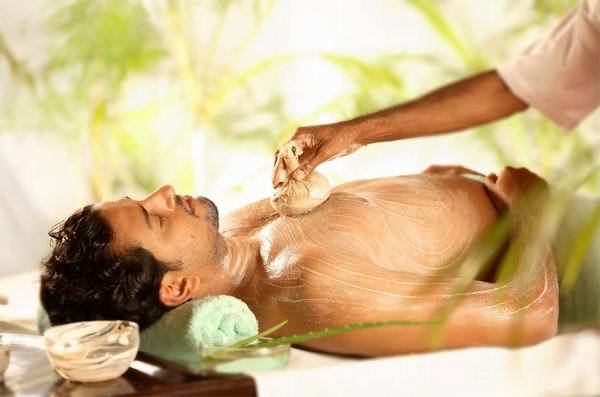
- Patra Pinda Sweda & Nadi Sweda: Warm steam and herbal leaf bolus therapies to relieve reflex spasms in the erector spinae, piriformis, and gluteal muscles.
- Specific Rasayana Formulations: Herbal compounds rich in Shallaki (Boswellia), Guggulu, Asthishrinkhala (Cissus quadrangularis), and Ashwagandha to rebuild connective tissue resilience.
Rehabilitation & Long-Term Spine Care
Once acute pain and inflammation subside, our clinical team guides patients through personalized rehabilitation to ensure long-term spinal stability:
- Gentle core activation exercises focusing on the transversus abdominis and multifidus muscles to create a natural muscular corset around the L4-L5 segment.
- Pelvic tilt corrections and hamstring stretching to eliminate excessive anterior pelvic tilt.
- Workstation adjustments: raising computer monitors to eye level, using ergonomic chairs with lumbar support, and avoiding soft sagging sofas.
- Proper lifting technique: always bending at the hips and knees while keeping loads close to the body, never bending solely from the waist.