
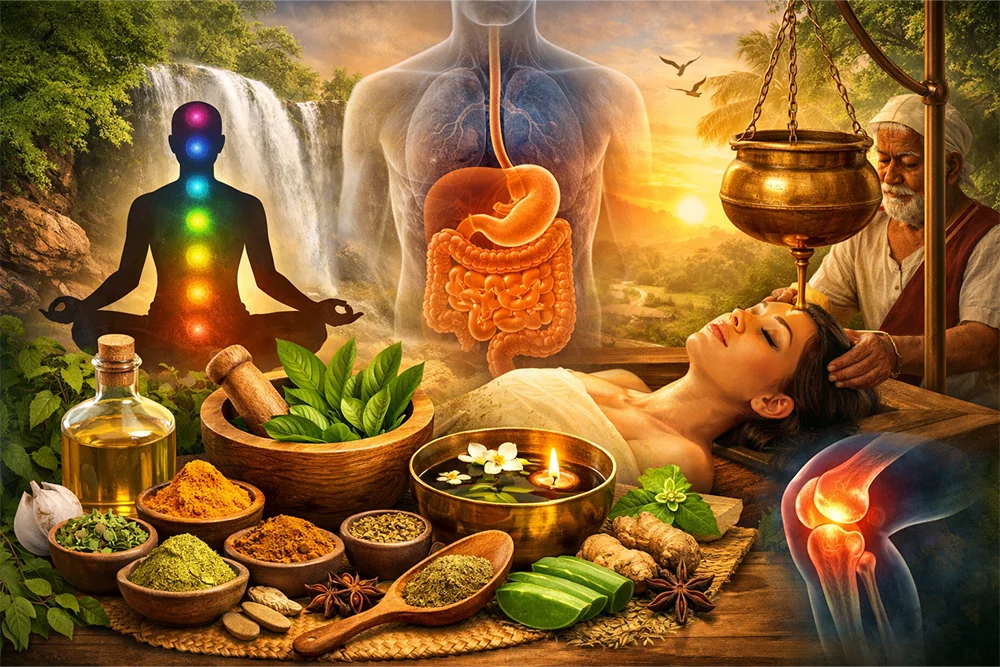
What is Knee Osteoarthritis?
The knee joint is a complex hinge joint where the thigh bone (femur), shin bone (tibia), and kneecap (patella) converge. Healthy articular cartilage lines these bone surfaces, providing a smooth, nearly frictionless gliding cushion bathed in viscous synovial fluid.
In knee osteoarthritis, this cartilage cushion progressively thins, frays, and breaks down over time. As cartilage diminishes, the underlying subchondral bone reacts by forming bony spurs (osteophytes), joint space narrows, and friction during weight-bearing causes localized pain, inflammation, and stiffness.
Knee osteoarthritis is particularly prevalent among adults aged 45 and above, individuals who are overweight, those with a history of knee injuries, and people whose occupations involve heavy stair climbing or prolonged kneeling.
Key Symptoms & Clinical Signs
Knee osteoarthritis typically begins with subtle discomfort that gradually progresses over months and years if unaddressed:
- Pain and aching inside or around the knee during walking, standing for long periods, or climbing stairs.
- Audible cracking, clicking, or grating sensation (crepitus) during knee bending or straightening.
- Morning stiffness lasting 15 to 30 minutes that eases after taking a few steps.
- Difficulty sitting cross-legged on the floor or getting up from low seating positions.
- Swelling and joint effusion, especially after prolonged activity or sudden weather changes.
- Gradual outward bowing of the legs (varus deformity) in advanced degenerative stages.
Ayurvedic Understanding: Sandhigata Vata
Classical Ayurveda identifies knee osteoarthritis as 'Sandhigata Vata'. In the Ayurvedic framework, joint integrity depends on two complementary forces: Sleshaka Kapha, the bio-fluid responsible for synovial lubrication and joint cushioning, and Vata dosha, which controls all bodily movement.
With aging, excessive physical strain, or Vata-provoking dietary habits, Vata dosha increases while Sleshaka Kapha diminishes. This leads to Dhatu Kshaya (tissue degeneration) characterized by dryness (Rukshata), micro-porosity, and wear of articular structures.
The classical symptoms described in Ayurveda—Sandhi Shoola (joint pain), Sandhi Shotha (joint swelling), and Prasarana Akunchana Pravritti Sa-Vedana (pain during extension and flexion)—mirror modern clinical presentations precisely.
Specialized Ayurvedic Knee Therapies
At Swasthik Ayurveda Hyderabad, knee treatment is personalized to restore joint lubrication, relieve friction, and strengthen supportive musculature through time-tested procedures:
- Janu Vasti: The hallmark Ayurvedic knee therapy. A leak-proof circular dam made from black gram dough is sealed around the knee joint. Warm, medicated herbal oils (such as Murivenna, Ksheerabala 101, or Mahanarayana) are poured and held at constant temperature for 35 to 45 minutes, deeply lubricating the joint capsule and nourishing cartilage.
- Patra Pinda Sweda (Elakizhi): Application of warm medicated herbal leaf boluses to reduce inflammation, dispel joint stiffness, and enhance lymphatic drainage around the knee.
- Shastika Shali Pinda Sweda (Navarakizhi): A restorative therapy using boluses of specialized red rice cooked in herbal decoctions and cow's milk, specifically designed to strengthen weakened quadriceps and patellar tendons.
- Agnikarma: Classical thermal micro-stimulation applied at specific tender tendon insertion points to deliver immediate pain relief in advanced bone-on-bone friction.
- Matra Vasti: Gentle medicated oil enemas to systematically pacify Vata dosha and support Asthi Dhatu (bone tissue) vitality from within.
Can Ayurvedic Care Postpone Joint Surgery?
Total Knee Replacement (TKR) is a major surgical procedure that may be necessary in advanced end-stage cases with complete joint collapse. However, for vast numbers of patients with Mild (Grade 1), Moderate (Grade 2), and even Moderately Severe (Grade 3) osteoarthritis, surgery can often be safely postponed or avoided altogether.
By reducing synovial inflammation, enhancing joint space lubrication, strengthening the quadriceps to absorb shock loads, and addressing weight management, Ayurvedic therapies provide substantial pain relief and restore independence in daily walking.
Dietary & Lifestyle Advice for Healthy Knees
Sustaining healthy knee function requires supporting your clinical therapies with proper daily nutrition and movement:
- Incorporate healthy fats such as pure A2 cow's ghee, sesame oil, and soaked almonds into your daily diet to counter internal Vata dryness.
- Drink warm water infused with ginger or turmeric to support circulation and reduce systemic inflammatory byproducts (Ama).
- Practice non-weight-bearing isometric quadriceps strengthening exercises daily (such as straight leg raises while lying flat).
- Avoid running on hard concrete or performing deep squats with heavy weights; prefer low-impact walking on even surfaces or swimming.
- Maintain an optimal body weight: losing just 1 kg of excess body weight relieves roughly 4 kg of pressure across each knee joint during walking.